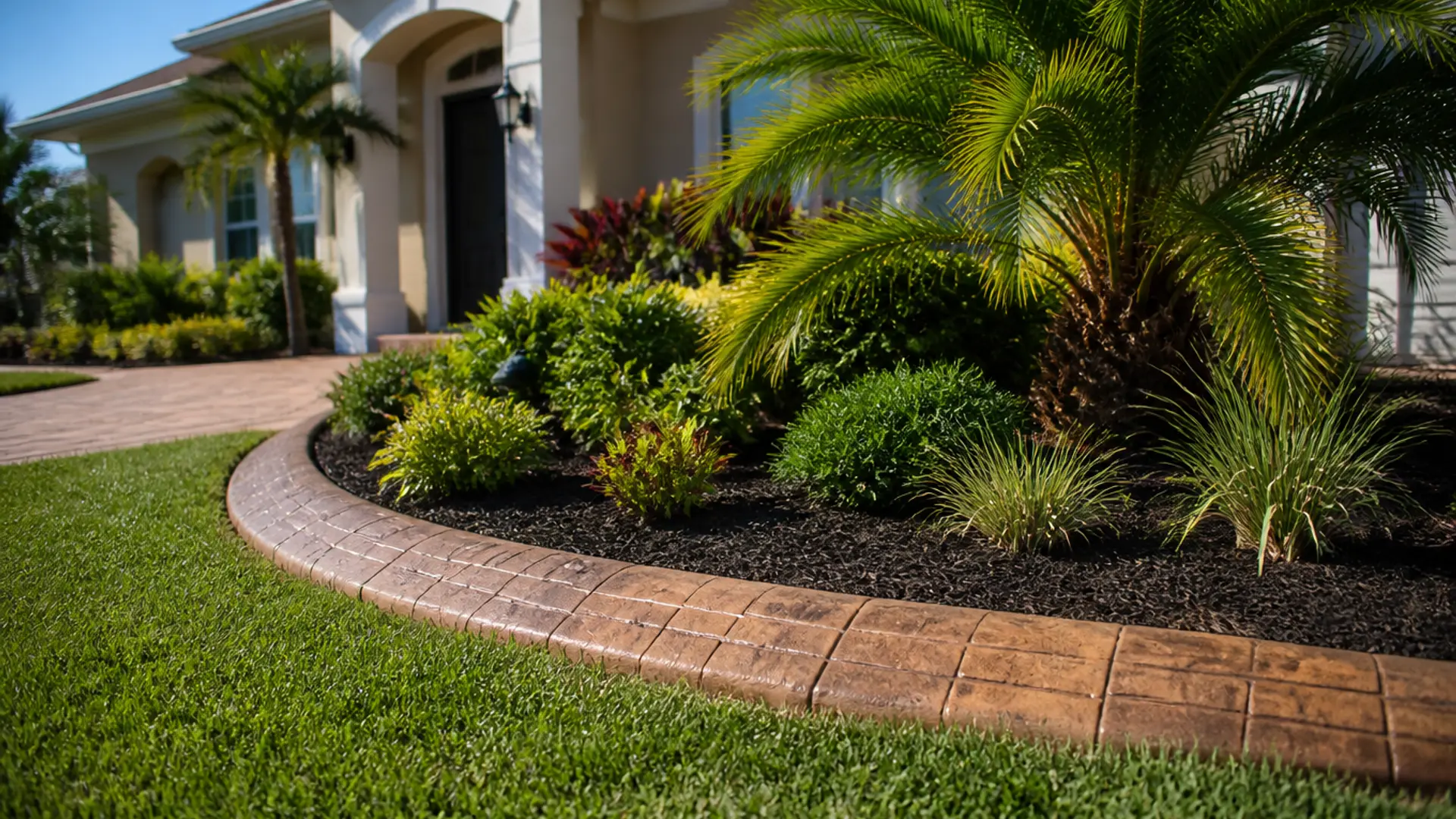
Two yards in the same Tampa Bay neighborhood can receive very different concrete curbing estimates, even when they look similar at first glance. Total linear footage, the number and complexity of curves or corners, the color or stamped finish selected, and how accessible the site is all shape the scope of a landscape curbing project. Existing irrigation, drainage, turf, pavers, mulch, and rock can also affect planning. A reliable estimate reflects the specific layout and finish choices for a property, not a generic rate.
What Actually Drives a Concrete Curbing Estimate
Before comparing numbers, it helps to understand what an estimate is actually measuring. A few core factors shape the scope of almost every project:
- Total footage: The overall length of border being installed.
- Curve and corner complexity: Flowing curves and tight corners take more time and precision than straight runs.
- Finish selection: An integral color or a stamped pattern changes the scope compared to a smooth, standard finish.
- Site accessibility: How easily equipment and material can reach the work area.
Because these variables combine differently on every property, a length-only figure rarely tells the full story.
What a Concrete Curbing Installation Actually Covers
We install continuous concrete borders that are machine-extruded on site along flower beds, garden areas, driveways, and walkways. The result is a seamless installed edge rather than separate connected pieces, which is part of why the layout and finish decisions made up front matter so much to the final scope.
Why Local Site Conditions Matter for Tampa Bay Properties
Many Tampa Bay properties combine turf, pavers, concrete drives, mulch, decorative rock, dense planting, irrigation heads, and drainage paths in a relatively compact space. We review these relationships when planning profile and finish, since irrigation heads, drainage paths, mower access, and the transitions between lawn, bed materials, pavers, and driveways should be addressed before placement is confirmed. Reviewing these details ahead of time supports a more accurate estimate and reduces the chance of revising the layout once planning has started. For a closer look at how this applies in the area, see landscape curbing in Tampa, FL.
Decorative Options That Can Change the Scope
Beyond length and layout, decorative selections can change project scope on their own. Available choices include:
- Sloped mower curbing
- Square or flat-top curbing
- Rounded styles
- Integral concrete colors
- Stamped patterns such as Flagstone, Natural Stone, London Cobble, Farmhouse Brick, or Wood Grain
It helps to separate the base layout decisions, like where the border runs and how it curves, from these optional appearance choices, since both can influence the final estimate. Examples of these styles in finished projects are available in our landscape curbing inspiration gallery.
Reading a General Price Reference vs. Getting a Project-Specific Estimate
It is worth being cautious about treating any generic per-foot figure found online as a final project price. Curves, corners, finish selections, access, and existing yard conditions can materially change the scope of a specific installation, so a number that applies to one property rarely transfers directly to another.
What to Have Ready Before You Request an Estimate
Walking into an estimate conversation with a few details in mind can make the process faster and more accurate:
- An approximate idea of the total border length
- A preferred profile, such as mower-friendly, flat-top, or rounded
- Whether a smooth or decorative stamped finish is preferred
- Which areas of the property should be edged, such as beds, walkways, or driveways
More detail on project scope, finish options, and aftercare is available in our decorative landscape curbing FAQs.
Installation Timeline and Long-Term Care
Most residential curbing projects are completed in one day, typically taking four to eight hours depending on size and complexity. New curbing needs roughly 24 to 48 hours before regular foot traffic or mowing near the edge. Once installed, we recommend resealing concrete curbing every two to three years to help protect color and surface appearance from UV exposure and weathering. Repeated direct contact from a string trimmer can chip the curbing surface over time, so a little care around the edge during routine mowing helps it hold up over the years.
Frequently Asked Questions
A per-foot figure only accounts for length. It does not reflect curve complexity, corners, finish selection, or how accessible the site is, all of which can change the actual scope of work.
Having an approximate border length, a preferred profile, a finish preference, and a clear idea of which areas to edge ready in advance helps make the estimate conversation more accurate and efficient.
Request Your Tampa Bay Concrete Curbing Estimate
Suncoast Decorative Curbing is firefighter-owned with more than 20 years of landscaping experience, serving Land O' Lakes, Wesley Chapel, Trinity, Tampa, Lutz, Odessa, Dade City, and Brandon. If you are ready to talk through footage, profile, and finish options for your property, call (813) 390-0834 to start your project-specific estimate.